Fat Dissolving Injections vs Weight Loss Injections – Which Is More Effective for Fat Loss?
Fat dissolving injections and weight loss injections are both commonly discussed options for fat reduction in Singapore, but they work in fundamentally different ways and are designed for different treatment goals. Understanding these differences is important when deciding which approach is more suitable.
Fat dissolving injections target small, localised fat deposits by breaking down fat cells in specific areas such as the double chin or jawline. In contrast, medical weight loss injections work systemically by regulating appetite, slowing gastric emptying, and influencing hormonal pathways involved in metabolism, leading to gradual fat reduction across the body.
Because of these differences, the results achieved with each treatment can vary significantly. Fat dissolving injections are generally limited to subtle contour improvement in small areas, while weight loss injections are used for broader fat loss and long-term weight management.
In this article, we compare fat dissolving injections and medical weight loss injections in terms of how they work, their effectiveness, and when each approach may be appropriate. This helps to provide a clearer understanding of which treatment may offer more meaningful and predictable fat loss outcomes.
Summary
Fat dissolving injections and weight-loss injections are often confused, but they are designed for different goals. Fat dissolving injections target small, localized fat pockets (such as under the chin), while weight-loss injections work throughout the body to promote overall fat loss and weight reduction.
- They are not the same treatment. Fat dissolving injections are body contouring treatments, whereas weight-loss injections are medical therapies aimed at reducing body weight and body fat.
- Fat dissolving injections target specific areas only. They are typically used for small, stubborn fat deposits such as a double chin or localized fat pockets.
- Weight-loss injections work systemically. They reduce appetite, increase satiety, and help patients achieve a sustained calorie deficit, leading to body-wide fat loss.
- Fat dissolving injections are not suitable for significant weight loss. Even when effective, the amount of fat reduced is limited to the treated area.
- Weight-loss injections generally produce greater overall fat reduction. Because they affect the body's appetite and metabolic pathways, they can lead to more noticeable and widespread results.
- Multiple fat dissolving sessions are often needed. Results tend to be gradual and can vary between individuals.
- Weight-loss injections may support longer-term weight management. They address some of the underlying biological factors involved in weight gain and obesity.
Understanding Fat Dissolving Injections
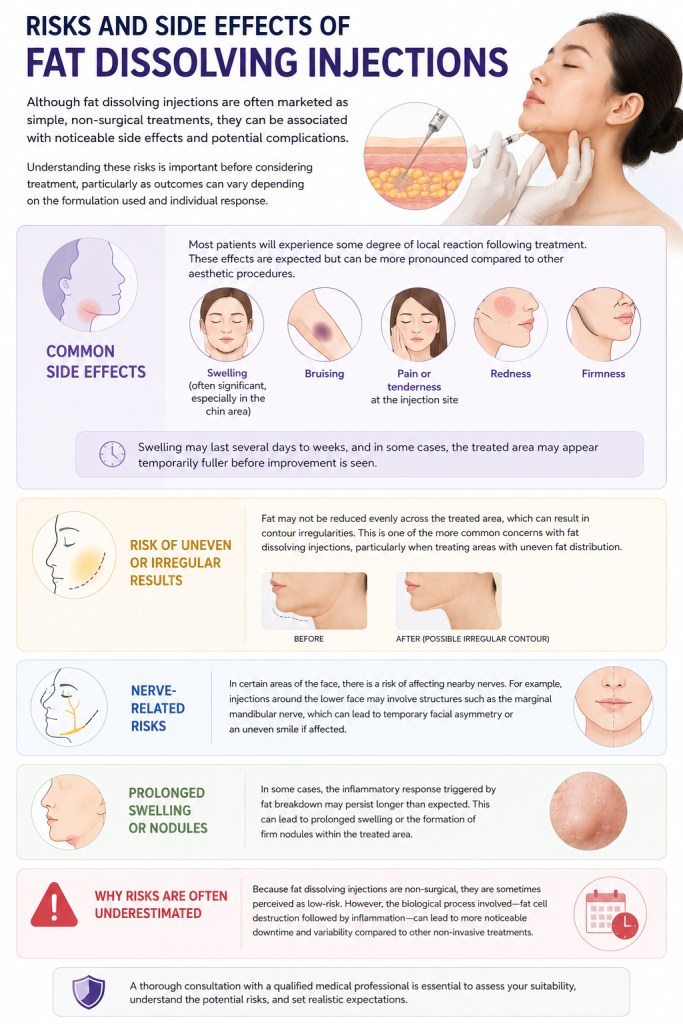
Fat dissolving injections are commonly used for reducing small, localised fat deposits in aesthetic practice. They are not designed for overall weight loss and are best suited for specific areas of stubborn fat rather than generalised fat reduction.

What Are Fat Dissolving Injections
Fat dissolving injections, also known as injection lipolysis, involve injecting compounds into fat tissue to break down fat cells. These treatments commonly use substances such as Deoxycholic acid, which disrupt fat cell membranes and lead to gradual fat breakdown and clearance by the body.
This approach is typically used for contouring small, localised fat deposits rather than achieving significant or overall fat loss.
Limitations of Fat Dissolving Injections
While fat dissolving injections may provide improvement in selected cases, they have several important limitations:
- Only effective for small, localised fat deposits
- Requires multiple treatment sessions
- Results can be variable between individuals
- Does not address overall body fat or weight
Because of these limitations, fat dissolving injections are generally not suitable for patients seeking noticeable or widespread fat loss.
What Are Weight Loss Injections?
Weight loss injections are doctor-prescribed treatments designed to reduce overall body fat by acting on appetite, satiety, and metabolic pathways. Unlike fat dissolving injections, which work locally on specific areas, these treatments work systemically to support gradual and sustained fat loss.
How GLP-1 Weight Loss Injections Work
Weight loss injections commonly act on the GLP-1 receptor pathway, which plays a key role in regulating appetite and blood sugar levels. This class of treatments includes once-weekly GLP-1 injections based on active ingredients such as Semaglutide.
These treatments work by:
- Reducing hunger signals in the brain
- Slowing gastric emptying, leading to prolonged fullness
- Enhancing satiety after meals

Learn more about semaglutide-based weight loss injections:
Read more...
Dual-Pathway Weight Loss Injections (GLP-1 + GIP)
Some newer weight loss injections also target the GIP receptor in addition to GLP-1. These treatments use active ingredients such as Tirzepatide and represent a more advanced approach to medical weight loss.
This dual-pathway approach:
- Enhances appetite regulation
- May improve metabolic efficiency
- Can lead to greater fat loss compared to single-pathway treatments

Learn more about dual-pathway weight loss injections (GLP-1 + GIP):
Read more...
What Results Can Be Expected
Weight loss injections are designed for overall fat reduction rather than targeting specific areas.
Patients may experience:
- Gradual and sustained weight loss
- Reduction in body fat across multiple areas
- Improved long-term weight management when used under medical supervision
Because these treatments act on underlying appetite and metabolic pathways, they tend to provide more consistent and predictable fat loss compared to localised fat reduction approaches.
Key Differences Between Fat Dissolving Injections and Weight Loss Injections
Fat dissolving injections and weight loss injections differ significantly in how they work, the type of fat they target, and the results they can achieve. Understanding these differences is important when deciding which approach is more suitable for fat reduction.

Localised Fat Reduction vs Whole-Body Fat Loss
Fat dissolving injections work locally by breaking down fat in specific areas such as the double chin or small fat pockets. In contrast, weight loss injections act systemically, leading to fat reduction across the entire body.
This means fat dissolving injections are used for contouring, while weight loss injections are used for overall fat loss.
Mechanism of Action
Fat dissolving injections rely on direct fat cell destruction at the injection site, commonly using compounds such as Deoxycholic acid.
Weight loss injections act on hormonal pathways such as the GLP-1 receptor and, in some cases, the GIP receptor, helping to regulate appetite, satiety, and metabolism.
Scale of Fat Reduction
Fat dissolving injections typically produce modest fat reduction limited to small treatment areas.
Weight loss injections can lead to more significant fat loss across multiple areas of the body, making them more suitable for patients with generalised fat or weight concerns.
For patients seeking clinically meaningful fat loss, these treatments are often preferred over localised fat reduction approaches.
Predictability of Results
Results from fat dissolving injections can be variable due to differences in formulation, treatment approach, and individual response.
Weight loss injections tend to produce more consistent and predictable outcomes when used under medical supervision.
Treatment Approach
Fat dissolving injections are performed as a series of localised treatment sessions targeting specific areas.
Weight loss injections are used as part of an ongoing treatment plan aimed at gradual and sustained fat loss over time.
Which Is More Effective for Weight Loss and Fat Reduction?
When comparing fat dissolving injections and weight loss injections, the effectiveness of each treatment depends largely on the goal—whether it is localised contouring or overall fat reduction. For most patients seeking meaningful fat loss, the difference in outcomes can be significant.

For Small, Localised Fat Deposits
Fat dissolving injections may be considered for small, well-defined areas of fat, such as the double chin or minor fat pockets.
In these cases:
- Improvement is usually gradual
- Multiple sessions are required
- Results are often subtle
They may be suitable for contour refinement, but their impact on overall body fat is limited.
For Overall Weight Loss and Body Fat Reduction
Weight loss injections are generally more effective for patients seeking broader fat reduction.
These treatments:
- Reduce appetite and caloric intake
- Lead to gradual fat loss across multiple areas of the body
- Address underlying metabolic and hormonal drivers of weight gain
Because they work systemically, they are able to produce more noticeable and clinically meaningful fat loss compared to localised treatments.
For Long-Term Weight Management
Fat dissolving injections do not play a role in long-term weight control, as they only target specific areas without influencing appetite or metabolism.
Weight loss injections, on the other hand:
- Support sustained weight reduction
- Help maintain weight loss over time when used appropriately
- Can be part of a structured, doctor-supervised treatment plan
Overall Comparison
For most patients seeking effective fat loss, weight loss injections offer a more comprehensive and predictable approach.
Fat dissolving injections may still have a role in selected cases for small areas of stubborn fat, but they are not a substitute for treatments designed to achieve overall weight reduction.
Why Many Patients Choose Weight Loss Injections Instead
As patients become more informed about fat reduction options, many are moving away from localised treatments and choosing medical weight loss injections for more consistent and meaningful results. This shift reflects a better understanding of how fat loss occurs and what is required to achieve noticeable outcomes.

More Consistent and Predictable Fat Loss
Weight loss injections act on appetite and metabolic pathways, leading to a more uniform reduction in body fat. Compared to fat dissolving injections, which can produce variable results depending on the area treated, systemic treatments tend to offer more consistent outcomes across different individuals.
Addresses the Underlying Cause of Weight Gain
Fat dissolving injections focus only on removing fat from a specific area. In contrast, weight loss injections work on the underlying drivers of weight gain, including appetite regulation and caloric intake.
By influencing these factors, patients are able to:
- Reduce overall food intake
- Achieve a sustained calorie deficit
- Support gradual fat loss over time
No Need for Multiple Localised Treatments
Fat dissolving injections typically require multiple sessions for each treatment area, and additional areas would need to be treated separately.
Weight loss injections:
- Work across the entire body
- Do not require targeting individual fat pockets
- Reduce the need for repeated localised procedures
More Suitable for Most Patients Seeking Fat Loss
For patients with generalised fat or weight concerns, systemic weight loss treatments are often more appropriate.
They provide:
- Broader fat reduction
- More noticeable changes in body composition
- Better alignment with long-term weight management goals
As a result, many patients seeking effective fat loss prefer treatments that address the body as a whole rather than focusing on isolated areas.
Potential Benefits Beyond Fat Loss
In addition to supporting fat reduction, medical weight loss treatments may also contribute to improvements in metabolic health when used under appropriate medical supervision.
These may include:
- Improved blood sugar control
- Better appetite regulation
- Reduction in weight-related health risks
While individual outcomes can vary, these broader effects are one reason why systemic weight loss treatments are often considered more comprehensive compared to localised fat reduction approaches.
When Fat Dissolving Injections May Still Be Considered
While weight loss injections are generally more effective for overall fat reduction, fat dissolving injections may still have a role in selected situations. Understanding when they may be appropriate helps provide a balanced view of both treatment options.

For Very Small, Localised Fat Deposits
Fat dissolving injections may be considered for small, well-defined fat pockets that are resistant to diet and exercise.
These typically include:
- Mild double chin
- Small areas along the jawline
- Minor, isolated fat deposits
In such cases, they may provide subtle contour improvement.
For Patients at Stable Body Weight
Patients who are already at or near their ideal body weight but have a specific area of concern may benefit more from localised treatments.
Fat dissolving injections may be suitable when:
- Overall body fat is low
- The concern is limited to a single small area
- There is no need for systemic fat reduction
As a Complement to Weight Loss Treatments
In some cases, fat dissolving injections may be used after weight loss to address small residual fat pockets that remain despite overall fat reduction.
This approach:
- Focuses on contour refinement
- Targets specific areas that do not respond fully to weight loss
- Is used selectively rather than as a primary fat loss treatment
Importance of Proper Patient Selection
Careful patient selection is important to achieving satisfactory results.
Fat dissolving injections are most appropriate when:
- Expectations are realistic
- The treatment goal is subtle contouring
- The limitations of the procedure are clearly understood
In many cases, alternative approaches may still provide more predictable outcomes, particularly when larger areas of fat or overall weight concerns are involved.
Doctor’s Perspective – Choosing the Right Fat Loss Treatment
From a clinical perspective, the choice between fat dissolving injections and weight loss injections depends on the type of fat concern, overall body composition, and treatment goals. These treatments serve different purposes, and selecting the appropriate approach is key to achieving meaningful and predictable results.
Who Is Suitable for Weight Loss Injections
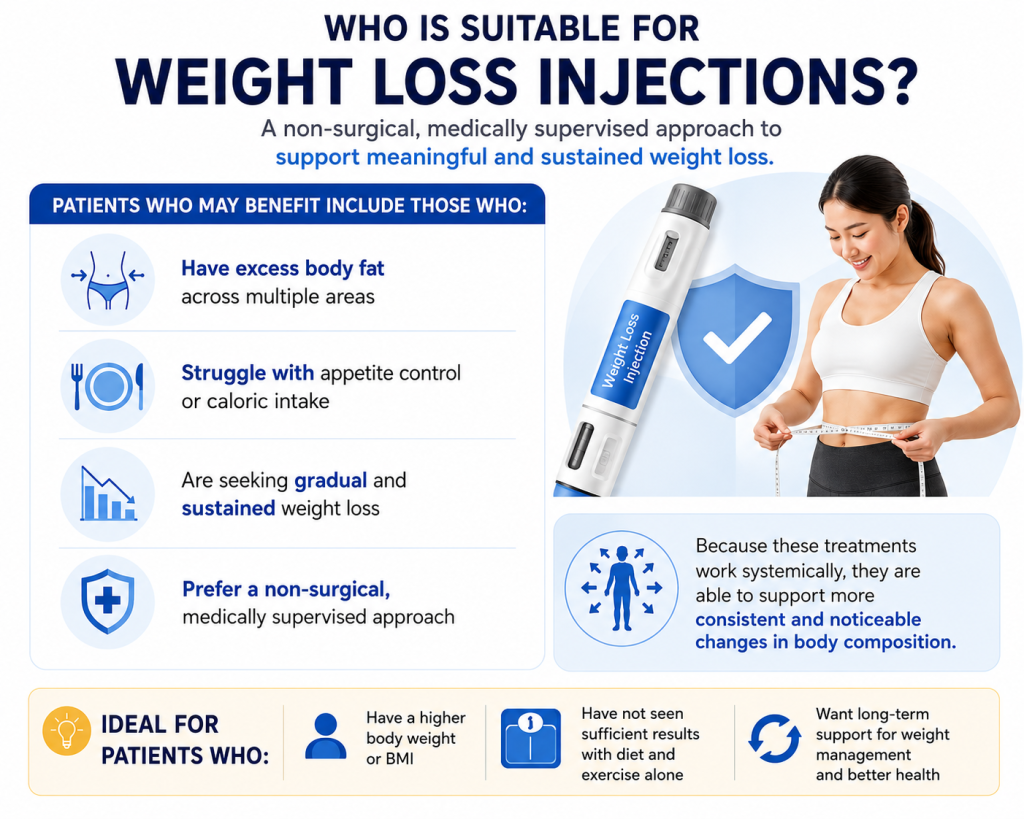
Weight loss injections are generally more suitable for patients with generalised fat or weight concerns, particularly when there is a need for broader fat reduction.
Patients who may benefit include those who:
- Have excess body fat across multiple areas
- Struggle with appetite control or caloric intake
- Are seeking gradual and sustained weight loss
- Prefer a non-surgical, medically supervised approach
Because these treatments work systemically, they are able to support more consistent and noticeable changes in body composition.
Who May Consider Fat Dissolving Injections
Fat dissolving injections may be considered in selected patients with very specific concerns.
These include patients who:
- Are already near their ideal body weight
- Have a small, well-defined area of stubborn fat
- Are seeking subtle contour improvement rather than overall fat loss
In these cases, fat dissolving injections may play a role in targeted contour refinement.
Importance of Individual Assessment
One of the most important factors in achieving good outcomes is proper assessment before treatment.
This involves evaluating:
- Distribution of body fat
- Presence of localised vs generalised fat
- Skin quality and elasticity
- Patient expectations and goals
A personalised medical assessment helps determine whether a localised treatment or a systemic approach is more appropriate.
A Structured Approach to Treatment Selection
In clinical practice, selecting the right treatment often follows a structured approach:
- Generalised fat or weight concerns → medical weight loss injections
- Small, localised fat pockets → targeted contouring treatments
- Residual areas after weight loss → selective localised treatments
This approach helps improve treatment predictability and ensures that the chosen method aligns with the patient’s goals.
Regulatory Considerations in Singapore
It is important to note that fat dissolving injections are not approved as a routine or standard aesthetic treatment in Singapore.
Due to concerns regarding safety, variable formulations, and limited high-quality evidence, their use is subject to regulatory restrictions and careful clinical consideration.
This is one reason why these treatments are less commonly offered compared to more established and evidence-based approaches for fat reduction.
Frequently Asked Questions About Fat Loss Treatments in Singapore
Patients comparing fat dissolving injections and weight loss injections often have similar concerns about effectiveness, safety, and suitability. The answers below address common questions based on clinical practice in Singapore.
Are Weight Loss Injections More Effective Than Fat Dissolving Injections?
Weight loss injections are generally more effective for overall fat reduction, as they work systemically to reduce appetite and support gradual fat loss across the body. Fat dissolving injections are limited to small, localised areas and typically produce more subtle results.
Do Fat Dissolving Injections Work for Weight Loss?
Fat dissolving injections are not designed for weight loss. They only target specific areas of fat and do not reduce overall body fat or body weight.
How Much Weight Can Be Lost with Weight Loss Injections?
Weight loss injections can support gradual and sustained weight reduction over time. The amount of weight loss varies between individuals and depends on factors such as baseline weight, adherence to treatment, and lifestyle habits.
Are Weight Loss Injections Safe?
Weight loss injections are generally safe when prescribed and monitored by a doctor. As with any medical treatment, there can be side effects, and suitability should be assessed on an individual basis.
Are Fat Dissolving Injections Approved in Singapore?
Fat dissolving injections are not approved as a routine or standard aesthetic treatment in Singapore.
Due to concerns about safety, variable formulations, and limited high-quality evidence, these treatments are not widely adopted in clinical practice and are subject to regulatory restrictions.
As a result, they are generally less commonly offered compared to more established and evidence-based approaches for fat reduction.
Which Treatment Is More Suitable for Me?
The most suitable treatment depends on whether the concern is localised fat or generalised weight gain. A personalised medical assessment is important to determine the most appropriate approach based on individual goals and body composition.
Conclusion – Choosing the Most Effective Approach for Weight Loss and Fat Reduction
Fat dissolving injections and weight loss injections serve different roles in fat reduction, but their effectiveness varies significantly depending on the treatment goal. For patients comparing these options, understanding this difference is key to achieving meaningful results.
Fat dissolving injections may be suitable for small, localised areas of stubborn fat, particularly in patients who are already near their ideal body weight. However, results are often gradual, limited in scale, and can vary between individuals. They are not designed for overall fat reduction or long-term weight management.
Weight loss injections, in contrast, work systemically by targeting appetite and metabolic pathways. This allows for more consistent, gradual, and clinically meaningful fat loss across the body, making them more suitable for patients seeking noticeable and sustained weight reduction.
For most individuals looking to achieve effective fat loss, treatments that address the underlying drivers of weight gain tend to provide more predictable and comprehensive outcomes compared to localised approaches.
A personalised medical assessment is important to determine the most appropriate treatment based on individual goals, body composition, and expectations.
Book a Consultation for Weight Loss Treatment in Singapore
If you are considering fat loss treatments in Singapore, a personalised consultation is important to determine the most suitable approach for your needs.
Each patient’s condition is different, and factors such as fat distribution, treatment goals, and overall health should be carefully assessed before deciding on treatment.

You may contact us here to arrange a consultation:
Read more...